About Fidelity National Information Services (FIS)
Fidelity National Information Services is a leading global provider of technology solutions for financial institutions, businesses, and government agencies. The company offers a wide array of services, including payment processing, banking software, and transaction management, enabling clients to enhance their operations and improve customer experiences. FIS aims to drive innovation in the financial sector by delivering advanced technology solutions that facilitate seamless transactions, streamline operations, and ensure regulatory compliance. With a strong focus on enhancing digital transformation, FIS plays a crucial role in the evolving landscape of finance and technology. Read More
FIS® (NYSE: FIS), a global leader in financial technology, today announced record first-half core wins across its community and regional banking business, representing millions of accounts added and reflecting growing demand from institutions seeking to modernize more of their banking ecosystem through a connected technology strategy. The wins span account origination, digital banking and core modernization, and include both new client relationships and expansion within existing FIS clients.
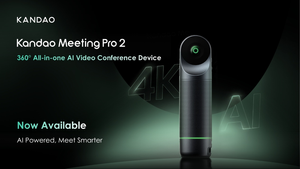
Shenzhen, September 10, 2026 -- Kandao Technology has introduced Kandao Meeting Pro 2, an all-in-one 4K conference system designed to improve communication and collaboration in hybrid meetings. Combining a 360° conference camera system with 4K HDR video, an 8-microphone array, AI-powered audio processing and built-in AI meeting tools, Meeting Pro 2 brings video, audio, and intelligent meeting assistance together in a single device.
Cherry Hill, NJ - September 7, 2026 - Medicare Supplement Plan G in New Jersey is filed by 18 carriers at rates from $147.88 to $260.98 a month for a 65-year-old, a $113 spread for coverage that is legally the same policy everywhere it is sold, according to CSG Actuarial filings EasyKind Medicare reviewed as of July 12, 2026. The gap does not hold steady. By 67 it widens to $116. By 69 it reaches $129, with the most expensive filing climbing to $283.
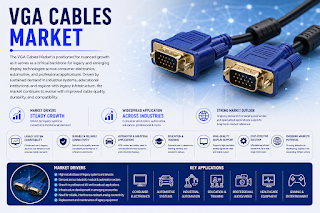
VGA Cables Market is positioned for nuanced growth as it serves as a critical backbone for legacy and emerging display technologies across consumer electro
Quantum computing is no longer a theoretical novelty confined to academic research labs. Enterprise spending on quantum capabilities has accelerated rapidly, driven by the promise of exponential computational advantages in drug discovery, financial modeling, supply chain logistics, and material science. Yet, alongside the massive investment numbers lies a quiet truth known across the industry: current quantum hardware remains fundamentally imperfect.
Fidelity offers higher yields through corporate and government bonds, while iShares provides lower costs and pure Treasury exposure with less volatility.
FIS® (NYSE: FIS), a global leader in financial services technology, today announced the launch of FIS® Embedded Banking Platform, its first embedded finance offering built specifically for banks. The platform enables U.S. banks to offer banking services directly within the business software their corporate customers use daily.